Why Ultra-Fine Spice Powders Are Revolutionizing the Food Industry
Ever notice how some spice powders blend seamlessly while others leave a gritty texture? The difference isn’t just grinding—it’s precision.
The spice industry faces a growing challenge. Consumers demand smoother textures, instant dissolution, and more potent flavors. Traditional grinding methods struggle to deliver. That’s where air classifying mill technology changes everything.
Think of it as the Swiss watch of grinding systems. While conventional mills crush and hope for the best, Air Classifying Mill Manufacturers in India have perfected a technology that combines grinding with real-time particle selection. Every particle gets evaluated. Too large? Back for more grinding. Just right? Exit immediately.
This precision matters more than ever. Modern food applications—from instant beverages to pharmaceutical-grade extracts—require particle uniformity that yesterday’s equipment simply can’t achieve. Forward-thinking processors who’ve made the switch report transformative results in product quality and customer satisfaction.
Your Next Step: Evaluate your current particle size consistency. If customers mention texture issues or you’re seeing batch variations, air classifying technology might be your solution.
Demystifying Air Classifier Mills: How Smart Grinding Works
The Science Behind Air Classification Made Simple
So what is Air Classifier Mill technology really about? Imagine a tornado inside a precision machine—controlled, purposeful, and incredibly effective.
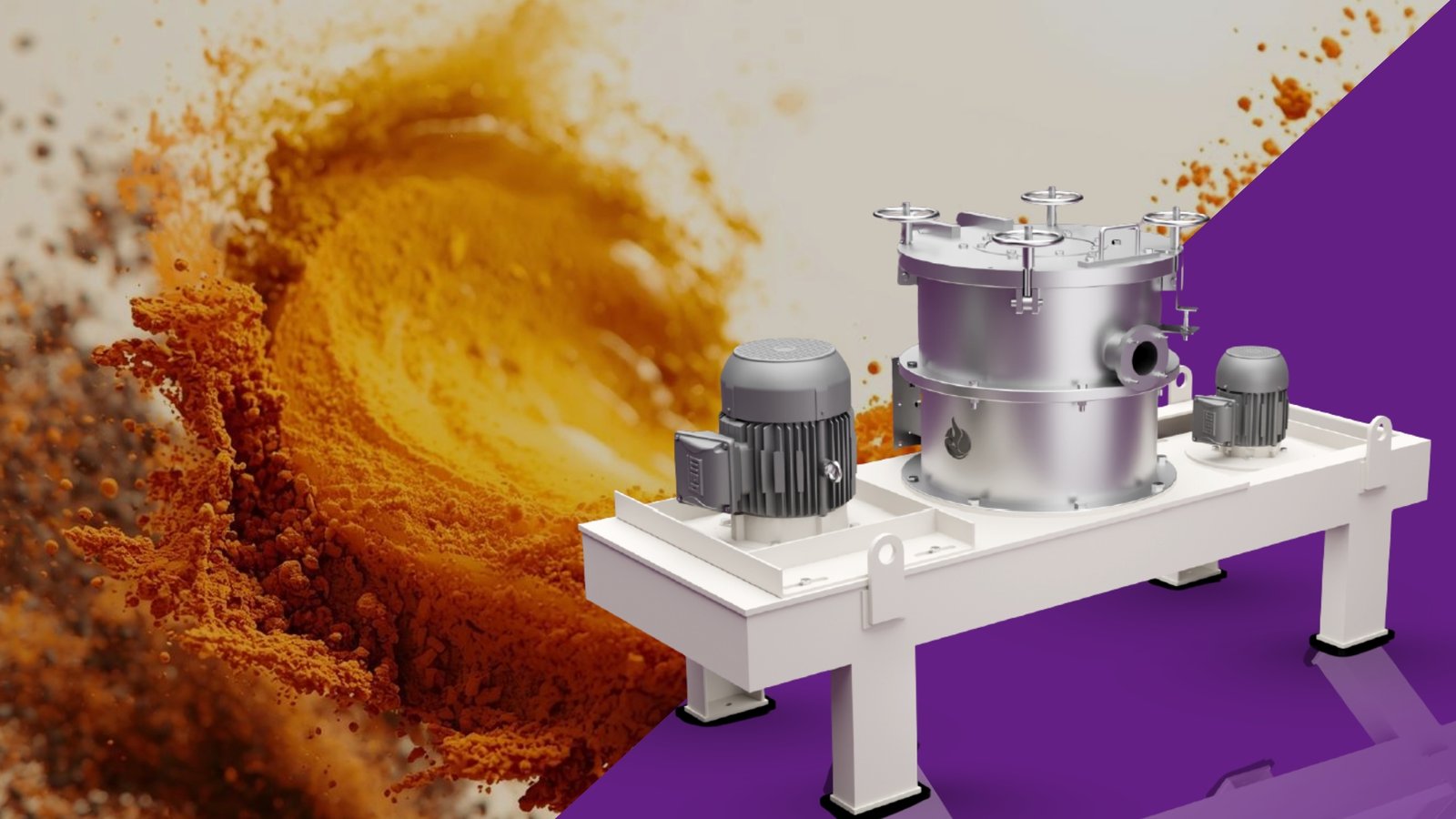
Here’s the air classifier mill working principle in action. Your spices enter a chamber where high-speed rotors create devastating impacts. But here’s the clever part: an integrated classification wheel spins independently, creating precise airflow patterns. This airflow instantly separates particles by size. Small particles ride the air current out. Larger ones get pulled back for another round.
The beauty lies in the simultaneous action. Traditional mills grind everything repeatedly, generating heat and damaging flavors. ACM systems immediately remove finished particles. No over-processing. No excessive heat. Just consistent, ultra-fine powder.
Industry leaders like MillNest have refined this technology through years of expertise in spice processing applications. Their systems demonstrate how proper engineering transforms a simple concept into production-ready solutions that deliver consistent results across diverse spice varieties.
Your Next Step: Request a demonstration of particle separation in action—seeing the classification process helps understand why this technology excels at ultra-fine applications.
What Makes Modern ACM Systems Different from Traditional Grinding
Understanding how does an air classifier mill work differently reveals its advantages. Traditional mills are like sledgehammers—powerful but imprecise. Air classifier mills are like surgeons—controlled and exact.
The ACM grinding machine doesn’t just reduce size; it manages the entire particle population. Think of it as having a quality control inspector inside the machine, constantly sorting particles. This real-time selection prevents the common problems of conventional fine grinding: heat buildup, wide size distributions, and flavor loss.
Modern Air Classifier Mill manufacturer India companies have pushed these capabilities further. Advanced rotor designs minimize energy waste. Optimized classification wheels achieve tighter cut points. Some systems now offer in-process adjustment—change your particle size without stopping production.
Your Next Step: Compare particle distribution curves from conventional grinding versus air classification for your specific products—the difference often surprises even experienced processors.
Perfect Applications: Where Air Classification Technology Shines
Premium Products That Demand Ultra-Fine Perfection
Premium spice applications live or die by particle size. Instant seasonings need complete dissolution. Encapsulated flavors require uniform coating. Pharmaceutical extracts demand consistent bioavailability.
The air classifying mill for ultra-fine powder excels in these demanding applications. Consider turmeric for supplements—finer particles mean better absorption. Or paprika for color release—smaller particles provide more intense color with less material. These aren’t just improvements; they’re competitive advantages.
Food manufacturers increasingly specify exact particle distributions. They know that consistency affects everything from flavor release to shelf stability. Meeting these specifications with conventional equipment often requires multiple passes, excessive screening, or accepting high reject rates. Air classification achieves targets in a single pass.
Your Next Step: Identify products where particle size directly impacts value—these represent your best opportunities for rapid return on investment.
Mastering Different Spice Characteristics with One System
Every spice presents unique challenges. The air classifying mill for spices adapts to these differences through adjustable parameters and specialized configurations.
Oily spices like nutmeg tend to smear during fine grinding. Air classification’s continuous particle removal prevents the buildup that causes this problem. Add optional cooling, and even the most challenging oleoresins process cleanly.
Fibrous materials traditionally resist fine grinding. Ginger, galangal, and lemongrass contain tough fibers that wrap around conventional grinding elements. The Air Classifying Mill for Particle Size Reduction uses high-velocity impacts combined with aggressive air sweep to overcome fiber resistance.
Hard spices require different approaches than soft ones. The flexibility to adjust both grinding intensity and classification parameters means one system handles your entire product range. No more dedicated mills for different products.
Your Next Step: Create a priority list of your most challenging grinding applications—these often show the most dramatic improvements with air classification.
The Performance Edge: Why ACM Technology Leads the Industry
Energy Efficiency That Impacts Your Bottom Line
Energy costs keep rising. Industrial powder processing solutions that minimize consumption become essential for competitive operations.
Air classifying mills achieve fine grinding more efficiently than multi-stage conventional systems. How? By removing particles immediately upon reaching target size. No wasted energy reducing already-fine particles. No excessive heat requiring cooling energy. Just efficient, targeted size reduction.
The ACM mill manufacturer community has embraced variable speed technology. Both grinding rotors and classification wheels adjust independently. Process soft spices at lower speeds. Save energy. Maintain quality. The flexibility to optimize for each product transforms efficiency.
Companies like MillNest integrate these efficiency features as standard, not options. Their experience in #FoodProcessing applications shows that energy savings often provide the fastest return on investment, especially for facilities operating multiple shifts.
Your Next Step: Calculate your current energy cost per kilogram for ultra-fine products—this baseline helps evaluate potential savings.
Achieving Particle Size Consistency That Customers Notice
Consistency separates professional operations from the rest. Industrial air classifying mill manufacturers deliver uniformity that conventional grinding can’t match.
Modern ACM systems produce remarkably tight distributions. Most particles cluster near the target size with minimal outliers. This consistency shows in final products—smoother textures, predictable dissolution, uniform color release.
Advanced classification wheels allow cut point adjustment during operation. Spot a drift in particle size? Adjust immediately without stopping. This real-time control maintains quality despite material variations.
The impact extends beyond technical specifications. Consistent products reduce customer complaints, eliminate rework, and build brand reputation. These “soft” benefits often exceed the measurable improvements in efficiency.
Your Next Step: Establish particle size specifications based on application requirements, not equipment limitations—then find technology that meets those specs.
Selecting Your Ideal Air Classifier Mill: A Practical Guide
Matching Capacity to Real Production Requirements
Sizing an Air Classifying Mill for grinding requires honest assessment. Dream big, but buy smart.
Start with your actual needs, not wishful thinking. Consider your finest products—they determine true capacity. A system might process standard grinds quickly but slow dramatically for ultra-fine specifications. Base decisions on reality.
Air Classifier Mill manufacturer India companies offer various configurations. Inline systems suit dedicated production with minimal changeovers. Batch systems excel when flexibility matters more than continuous flow. Some facilities install multiple smaller units rather than one large system—maintaining flexibility while building redundancy.
MillNest’s approach emphasizes right-sizing through careful consultation. Their application engineers help processors avoid both under-buying (creating bottlenecks) and over-buying (wasting capital). This consultative approach reflects their commitment to long-term customer success.
Your Next Step: Map your product mix by fineness requirements and batch sizes—this reveals whether you need one versatile system or multiple dedicated units.
Features That Determine Long-Term Success
Quality construction separates professional equipment from problems waiting to happen.
Grinding rotors endure tremendous forces. Quality manufacturers use forged or precision-machined rotors with replaceable wear parts. Yes, quality costs more initially. But component replacement costs less than rotor replacement, and planned maintenance beats emergency repairs.
Classification wheels deserve equal attention. The best designs feature hardened edges where erosion occurs. Some incorporate exotic materials in critical zones—expensive but worthwhile for abrasive products.
Bearing systems make or break reliability. High speeds and continuous operation demand premium bearings with advanced sealing. Temperature monitoring and automatic lubrication prevent the failures that cause cascade damage.
Your Next Step: Request maintenance histories from reference installations—real-world performance beats specifications every time.
Optimizing Your ACM Operations: Practical Processing Wisdom
Finding the Sweet Spot for Each Product
Achieving target particle sizes in an air classifying mill for ultra-fine powder requires understanding three key relationships.
Rotor speed drives impact energy. Faster means finer—to a point. Beyond optimal speed, you waste energy and generate heat without meaningful improvement. Most spices perform best at moderate speeds that balance fineness with efficiency.
Classifier wheel speed determines cut point. Want finer powder? Increase classifier speed. But watch yield—excessive speeds reject acceptable particles.
The art lies in finding the minimum speed that achieves specifications.
Feed rate affects everything. Too fast overwhelms classification. Too slow wastes energy. The sweet spot typically sits somewhere in the middle, where the system runs smoothly without forcing.
Your Next Step: Document optimal parameters for each product—this knowledge base becomes invaluable for training and troubleshooting.
Maintenance Strategies That Prevent Surprises
Smart maintenance keeps air classifying mills running profitably.
Daily observations catch problems early. Listen for changes. Watch for vibrations. Monitor power draw. These simple checks prevent most unexpected failures.
Wear parts need regular attention. Grinding elements wear predictably based on throughput and abrasiveness. Classification wheels erode slowly but affect quality when worn. Schedule replacements based on tonnage, not calendar time.
Balance matters enormously at high speeds. Even slight imbalance causes vibration that damages bearings and seals. Regular dynamic balancing extends component life dramatically.
The engineering team at MillNest emphasizes preventive maintenance in their equipment design. Easy-access inspection ports, quick-change wear parts, and clear maintenance schedules reflect their understanding that uptime drives profitability.
Your Next Step: Establish baseline vibration measurements for new equipment—these references help identify problems before they cause failures.
The Business Case: Real Returns from Air Classification Investment
Premium Markets That Reward Ultra-Fine Capabilities
The ability to produce ultra-fine powders opens doors to premium markets. Industrial powder processing solutions that achieve precise particle control command higher prices.
Nutraceutical applications value bioavailability. Finer particles absorb better. Better absorption justifies premium pricing. The math is simple: higher margins offset processing costs.
Instant products require complete dissolution. No grittiness. No settling. Air-classified powders deliver the smooth experience consumers expect. Brand owners pay premiums for this quality.
New product development accelerates with ultra-fine capabilities. Microencapsulation, flavor systems, pharmaceutical grades—all require precise particle control. These innovations diversify revenue beyond commodity markets.
Your Next Step: Survey customers about unmet needs in particle size—you might discover premium opportunities hiding in plain sight.
Building Realistic ROI Models
Air Classifier Mill price considerations extend beyond equipment cost. Smart buyers evaluate total value.
Energy savings accumulate quickly. More efficient grinding means lower power bills. For multi-shift operations, these savings add up substantially.
Labor efficiency improves through automation. One operator manages multiple units. Consistent quality reduces inspection time. Simplified cleaning speeds changeovers.
Quality improvements deliver immediate returns. Less rework. Fewer complaints. Premium pricing. These benefits often surprise managers who focus solely on efficiency gains.
Companies like MillNest support ROI analysis with real performance data from similar applications. Their transparency helps processors make informed decisions based on realistic expectations rather than optimistic projections.
Your Next Step: Build comprehensive ROI models including all benefits—the cumulative impact often justifies faster implementation than single-factor analysis suggests.
Future-Proofing Your Operations: Technology Trends to Watch
Digital Integration Transforming Traditional Grinding
The #FoodTechIndia revolution reaches air classification. Smart sensors. Real-time analytics. Predictive optimization.
Modern ACM systems generate continuous data streams. Temperature, pressure, vibration, particle size—all monitored constantly. This information enables optimization impossible with periodic manual checks.
Machine learning identifies patterns humans miss. Subtle correlations between parameters and quality emerge from data analysis. Systems automatically adjust to maintain optimal performance despite changing conditions.
Predictive maintenance prevents failures. Algorithms analyze trends to forecast component wear. Schedule replacements during planned downtime. Eliminate emergency repairs.
Your Next Step: Prioritize digital-ready equipment even if you’re not ready for full implementation—capability preservation protects your investment.
Sustainability Driving Equipment Evolution
The #SustainableManufacturing movement shapes equipment design. Energy efficiency evolves from advantage to requirement.
Next-generation ACM systems target dramatic efficiency improvements. Revolutionary rotor designs. Advanced classification geometries. Optimized airflow patterns. Every element scrutinized for efficiency gains.
Circular economy principles influence construction. Modular designs enable upgrades without replacement. Components get refurbished, not discarded.
Equipment life extends through renovation rather than replacement.
Water conservation gains importance globally. Dry cleaning technologies eliminate water use completely. Advanced air-wash systems achieve pharmaceutical-grade cleanliness without liquids.
Your Next Step: Evaluate suppliers’ sustainability commitments—partners invested in environmental responsibility better support your long-term goals.
Your Roadmap to Ultra-Fine Grinding Excellence
The journey to ultra-fine grinding excellence starts with understanding. You now know how air classifying mill technology delivers what conventional grinding cannot—consistent, ultra-fine powders that preserve quality while maximizing efficiency.
Success requires more than equipment. It demands commitment to excellence.
Start by identifying where ultra-fine grinding adds genuine value to your products. Not every application benefits equally. Focus where particle size directly impacts customer satisfaction or enables premium pricing.
Partner with experienced manufacturers who understand your challenges. Companies like MillNest bring decades of spice processing expertise to every installation. Their comprehensive approach—from initial consultation through ongoing support—ensures your investment delivers expected returns.
- Take action with confidence:
- Audit current particle size consistency and customer requirements
- Identify products where ultra-fine grinding enables premiums
- Request testing with your specific materials
- Evaluate total value, not just purchase price
- Plan implementation with realistic timelines
The spice processing industry continues evolving. Customer expectations rise. Competition intensifies. Air classifying technology provides the capabilities needed to thrive in this demanding environment.
Your next step determines your competitive future. Will you continue struggling with conventional grinding limitations? Or will you embrace the precision and efficiency of air classification?
The choice—and the opportunity—is yours.
Transform your grinding operations. Exceed customer expectations. Lead your market.
Discover more innovative processing solutions at www.millnest.com and join the #MillNestAcademy community of progressive processors.
#MillNestOriginals, #TechTuesdayMillNest, #FoodProcessing, #SpiceIndustry, #IndustrialEquipment, #ManufacturingIndia, #SpiceProcessingEquipment, #FoodTechIndia, #SustainableManufacturing, #GrindingTechnology